
Egg Cell Quality: 14-day meal plan (English)
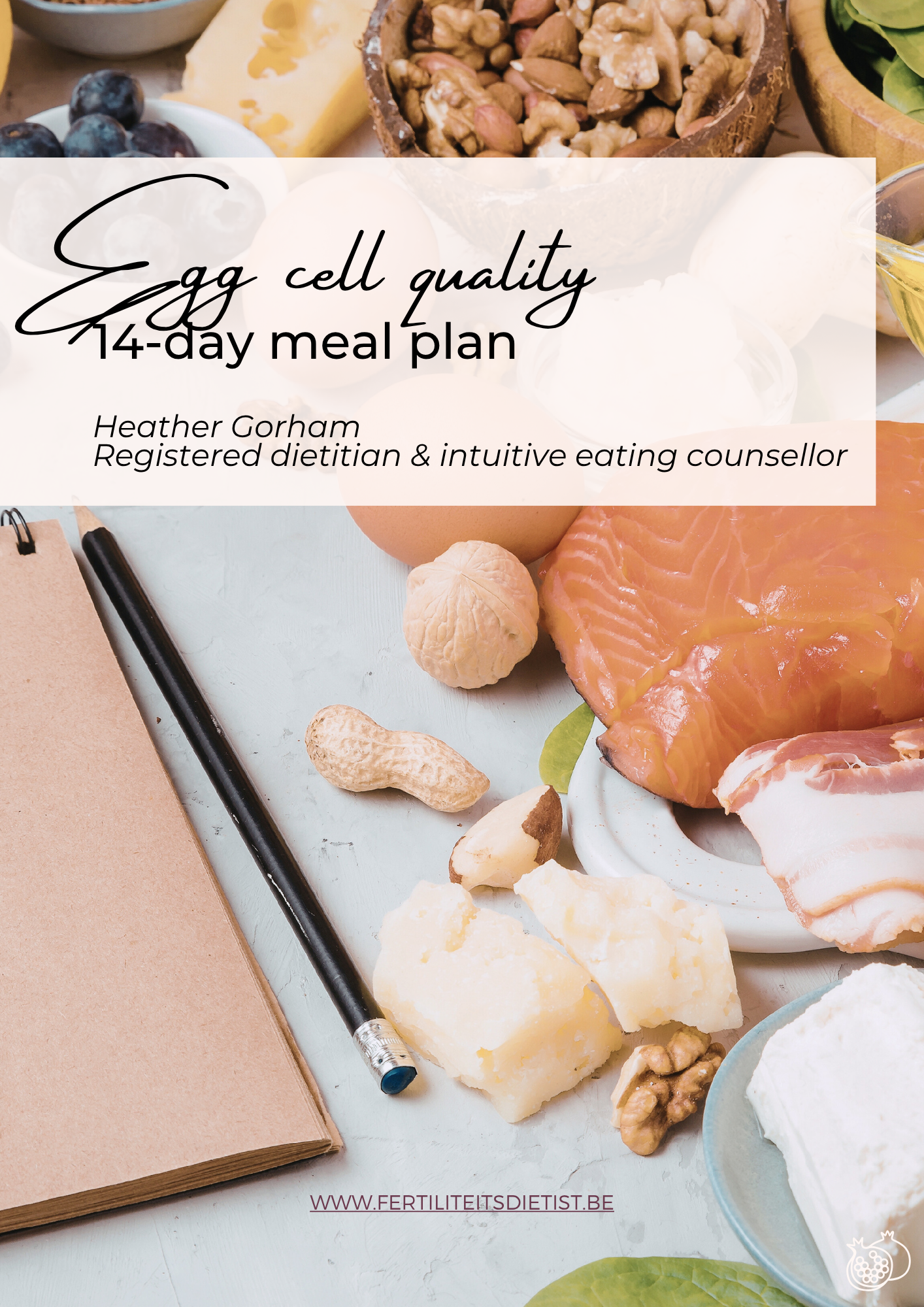
Egg Cell Quality: 14-day meal plan (English)
The theory from the Egg Cell Quality Guide, put into practice. 14 days of real, fertility-focused meals, built for normal life
Long lists of nutrients and foods are genuinely helpful to understand. And they can also be really hard to translate into what you actually eat on a Tuesday evening when you are tired and just want dinner to be sorted.
That gap, between knowing what supports egg health and actually making it happen, is where most people get stuck. And it makes sense. A fertility journey already asks a lot of you. Adding the mental load of trying to build fertility-optimised meals from scratch, on top of everything else, is a lot.
This meal plan was put together to take that part off your plate. Every recipe is built around the nutritional foundations in the Egg Cell Quality Guide, without any of that showing up in a way that feels clinical or prescriptive. Just food that is genuinely satisfying and doing something good for your body at the same time.
What's included
→ 14 days of complete meal plans: breakfast, lunch, and dinner
→ Every lunch and dinner recipe is unique, that’s 28 main meals across the two weeks
→ A full snack inspiration list with enough variety to rotate without the waste
→ Built-in flexibility; double the dinners and you have 56 days of meals with half the cooking
→ A weight-neutral approach throughout - no calorie targets, no restriction, no guilt
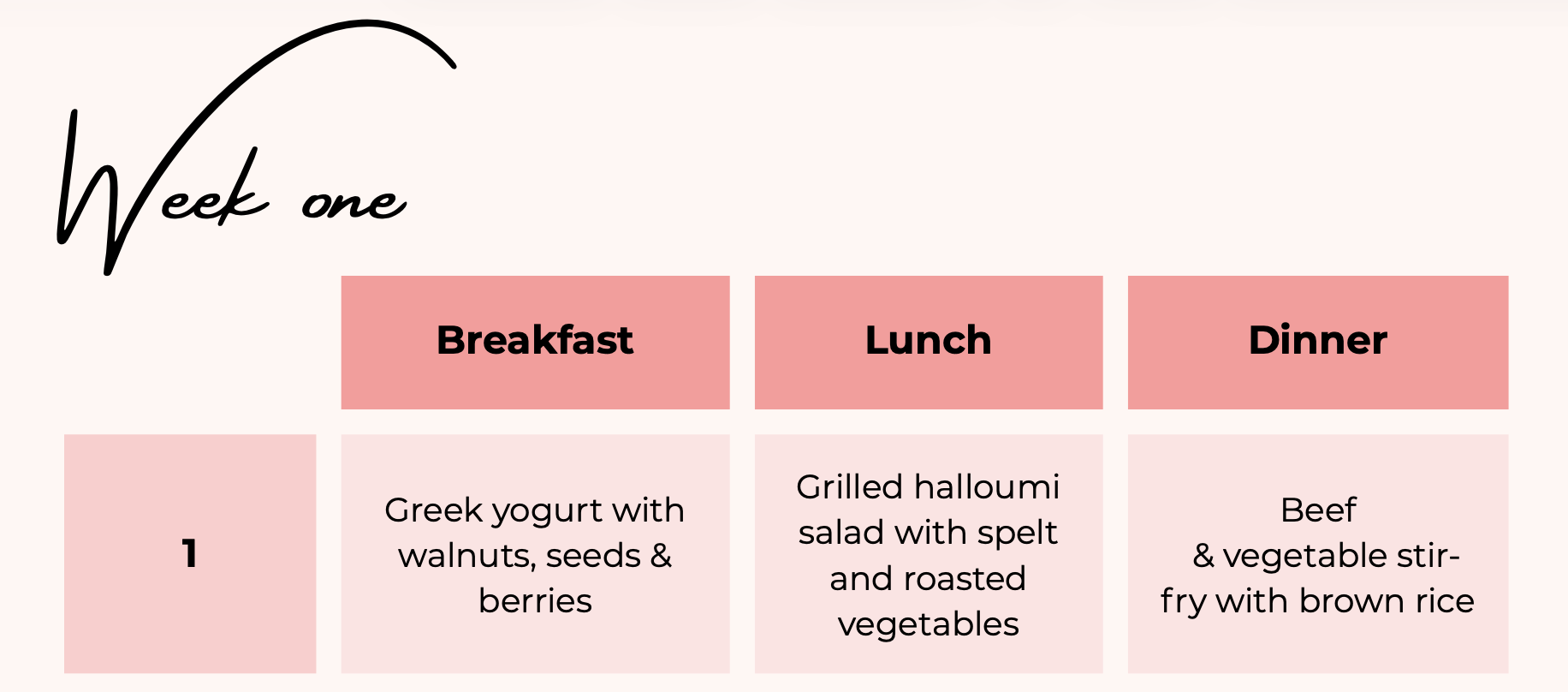
A sneak peek at the menu
To give you a sense of what two weeks actually looks like:
A word on how to use the meal plan
Every lunch and dinner recipe across the 14 days is unique, which gives you a lot of variety. That also means a lot of different recipes to cook, and depending on your schedule, that may or may not feel manageable.
One option that works well: cook only in the evenings, but double the recipe so you have lunch ready for the following day. Approached that way, you have 56 days of meals rather than 14 - with the same amount of cooking you were already doing.
On snacks: They are not allocated day by day. Instead, there is a full inspiration list to draw from. The suggestion is to plan for at least two snacks a day and rotate 5–7 options across the week. That keeps things varied without generating a lot of food waste or decision fatigue.

About Heather
Heather Gorham is a registered dietitian specialising in fertility, pregnancy, and postpartum nutrition. Her approach is weight-neutral and evidence-based, which means she will never tell you to lose weight as a fertility intervention, and she will not dress up weak evidence as fact.
She has supported individuals and couples through trying to conceive, IVF, and other fertility journeys, and she understands the emotional weight that sits underneath every nutritional decision you make during this time. Every recommendation in this guide is grounded in research, and where the picture is genuinely complicated, she says so.
The meal plan pairs with the Egg Cell Quality Guide
The meal plan was built from the foundations in the guide, so if you want to understand the reasoning behind the recipes (why omega-3s, which supplements are actually worth it, what the research says about the 3-month window before retrieval), the guide is where that lives.
Purchase both the guide and the meal plan and get a 10 euro bundle discount!
A practical guide to support your egg quality
If you are navigating fertility challenges, there is a good chance you have already spent a lot of time searching for answers. Foods to add, things to cut out, supplements that might help. Every article leads to three more, and somewhere along the way the whole thing starts to feel like a part-time job, one that comes with a lot of anxiety and very little clarity.
That is a completely understandable place to be. The fertility nutrition space is genuinely overwhelming. A lot of what's out there is either too vague to be useful, too restrictive to be sustainable, or built on claims the evidence doesn't actually support.
This guide was written to give you something different. Clear, honest, research-backed information about how nutrition and lifestyle intersect with egg quality, so you can make informed decisions without the mental spiral.